Filipino Pork Adobo
Highlighted under: Global Taste Adventures
Filipino Pork Adobo is a delicious and savory dish that showcases the rich flavors of soy sauce, vinegar, and garlic, creating a perfect harmony that is loved by many.
Adobo is often considered the unofficial national dish of the Philippines. With its unique blend of flavors, it has a rich history and is a staple in Filipino households.
Why You'll Love This Recipe
- A perfect balance of savory and tangy flavors
- Tender pork that absorbs all the delicious marinade
- Easy to make, yet impressive enough for guests
The Essence of Filipino Cuisine
Filipino cuisine is a delightful fusion of flavors and influences, shaped by its diverse history and culture. Pork Adobo stands out as a quintessential dish that captures the heart of Filipino cooking. The unique combination of soy sauce and vinegar not only provides a robust flavor but also reflects the country’s agricultural practices and local ingredients. Each region in the Philippines may have its own take on Adobo, showcasing how versatile and beloved this dish truly is.
Adobo is often referred to as the unofficial national dish of the Philippines, and for good reason. Its preparation is simple yet satisfying, making it a staple in both everyday meals and special occasions. The cooking method allows for the development of deep, rich flavors that are perfect for family gatherings or when entertaining guests. The communal aspect of sharing a pot of Adobo fosters warmth and togetherness, which is a core value in Filipino culture.
Marinating for Maximum Flavor
The marinating process is essential in achieving the perfect Pork Adobo. By allowing the pork to soak in the mixture of soy sauce, vinegar, and spices, you enable the meat to absorb all those delicious flavors. This step not only enhances the taste but also helps to tenderize the pork, resulting in melt-in-your-mouth bites. For best results, marinate the pork for at least 30 minutes, though overnight marination will yield even more flavor and tenderness.
Don't hesitate to experiment with the marinade! You can adjust the vinegar and soy sauce ratios to suit your taste preferences or add other spices like chili for a hint of heat. Some cooks even introduce coconut milk or pineapple juice for a twist on the traditional flavor profile. Regardless of how you choose to marinate, the key is to let the pork soak up the goodness fully.
Serving Suggestions
Pork Adobo is best enjoyed with a generous serving of steamed white rice, which acts as the perfect canvas for soaking up the savory sauce. Pairing it with a side of fresh vegetables or a simple salad can add a refreshing contrast to the rich flavors of the dish. You can also serve it with pickled vegetables, known as 'atsara,' for an added tangy crunch that complements the Adobo beautifully.
For those who love to explore flavors, consider serving your Pork Adobo with a side of fried plantains or a warm tortilla. These options add a delightful texture and sweetness that balances the savory notes of the dish. Whether it's a family meal or a festive gathering, Pork Adobo is sure to impress and leave your guests coming back for seconds.
Ingredients
Pork Marinade
- 2 pounds pork belly, cut into cubes
- 1/2 cup soy sauce
- 1/2 cup vinegar (cane or white)
- 1 tablespoon vegetable oil
- 1 onion, sliced
- 6 cloves garlic, minced
- 2 bay leaves
- 1 teaspoon black peppercorns
- 1 tablespoon brown sugar
- Salt to taste
Combine all the marinade ingredients with the pork and let it sit for at least 30 minutes, or overnight in the refrigerator for best results.

Instructions
Marinate the Pork
In a large bowl, combine pork, soy sauce, vinegar, garlic, onion, bay leaves, peppercorns, and brown sugar. Let marinate for at least 30 minutes.
Cook the Pork
In a large pot, heat vegetable oil over medium heat. Add the marinated pork (reserve the marinade) and cook until browned.
Add the Marinade
Pour the reserved marinade and add water to cover the pork. Bring to a boil, then reduce the heat and simmer for about 40-50 minutes, or until the pork is tender.
Serve
Adjust seasoning with salt and serve hot over steamed rice.
This dish is best enjoyed the next day when the flavors have melded together.
Pro Tips
- For a richer flavor, consider adding hard-boiled eggs or potatoes during cooking.
Storing and Reheating Leftovers
One of the best things about Pork Adobo is that it tastes even better the next day! The flavors continue to meld and deepen as it sits, making it an excellent option for meal prep. To store leftovers, allow the dish to cool completely before transferring it to an airtight container. It can be kept in the refrigerator for up to 3 days or frozen for up to a month.
When reheating, simply warm it on the stovetop over low heat, adding a splash of water if needed to loosen the sauce. If using a microwave, cover it loosely to avoid drying out the pork. Enjoying leftovers allows you to savor the deliciousness of this dish all over again!
Variations of Pork Adobo
While this recipe focuses on the classic Pork Adobo, many variations exist that cater to different tastes and dietary preferences. For example, some may prefer using chicken or beef instead of pork, while others might opt for a vegetarian version using tofu or mushrooms. Each variation offers a unique take on the traditional dish, ensuring there’s something for everyone.
In addition to protein swaps, you can also experiment with different types of vinegar or soy sauce. Some people enjoy using coconut vinegar for a more authentic flavor, while others might add spices like star anise or cinnamon for a twist on the classic recipe. Feel free to get creative and make this dish your own!
Cultural Significance of Adobo
Pork Adobo is more than just a meal; it holds cultural significance in the Philippines. Traditionally, Adobo was a way to preserve meat before refrigeration became common, as the vinegar and soy sauce help to keep the pork fresh for longer periods. This preservation method showcases the ingenuity of Filipino cooks throughout history, adapting to their environment and resources.
Today, Pork Adobo is often served during celebrations, family gatherings, and special occasions, symbolizing hospitality and the importance of sharing food with loved ones. It serves as a comforting reminder of home for many Filipinos, whether they are in the Philippines or abroad, making it a cherished dish that transcends generations.
Questions About Recipes
→ Can I use other meats for adobo?
Yes! Chicken, beef, or even tofu can be used as alternatives.
→ How long can I store leftovers?
Leftovers can be stored in the refrigerator for up to 3 days.
→ Is adobo gluten-free?
If you use gluten-free soy sauce, then yes, adobo can be gluten-free.
→ Can I make adobo in advance?
Absolutely! In fact, adobo tastes even better the next day.
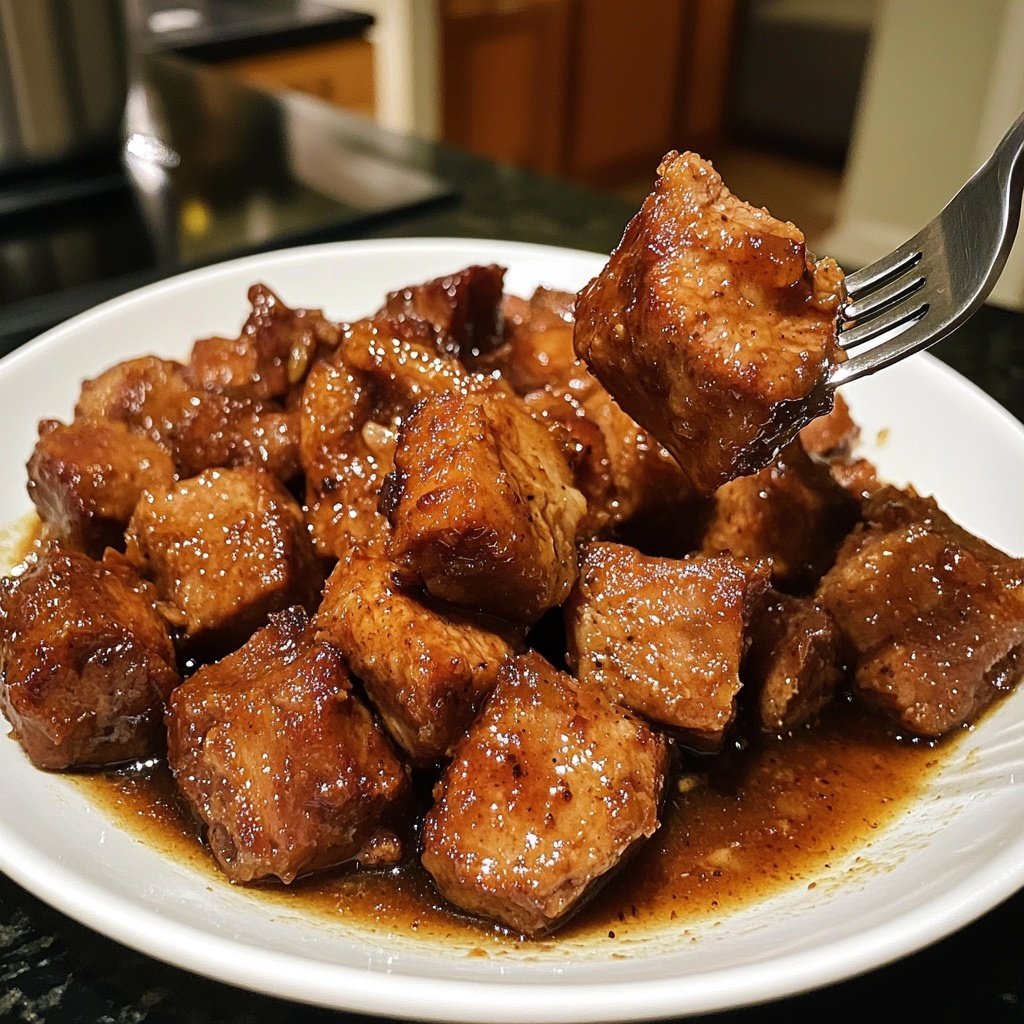
Filipino Pork Adobo
Created by: The Anna's Tasty Table Team
Recipe Type: Global Taste Adventures
Skill Level: Intermediate
Final Quantity: 4 servings
What You'll Need
Pork Marinade
- 2 pounds pork belly, cut into cubes
- 1/2 cup soy sauce
- 1/2 cup vinegar (cane or white)
- 1 tablespoon vegetable oil
- 1 onion, sliced
- 6 cloves garlic, minced
- 2 bay leaves
- 1 teaspoon black peppercorns
- 1 tablespoon brown sugar
- Salt to taste
How-To Steps
In a large bowl, combine pork, soy sauce, vinegar, garlic, onion, bay leaves, peppercorns, and brown sugar. Let marinate for at least 30 minutes.
In a large pot, heat vegetable oil over medium heat. Add the marinated pork (reserve the marinade) and cook until browned.
Pour the reserved marinade and add water to cover the pork. Bring to a boil, then reduce the heat and simmer for about 40-50 minutes, or until the pork is tender.
Adjust seasoning with salt and serve hot over steamed rice.
Extra Tips
- For a richer flavor, consider adding hard-boiled eggs or potatoes during cooking.
Nutritional Breakdown (Per Serving)
- Calories: 380 kcal
- Total Fat: 26g
- Saturated Fat: 15g
- Cholesterol: 195mg
- Sodium: 85mg
- Total Carbohydrates: 32g
- Dietary Fiber: 3g
- Sugars: 24g
- Protein: 6g